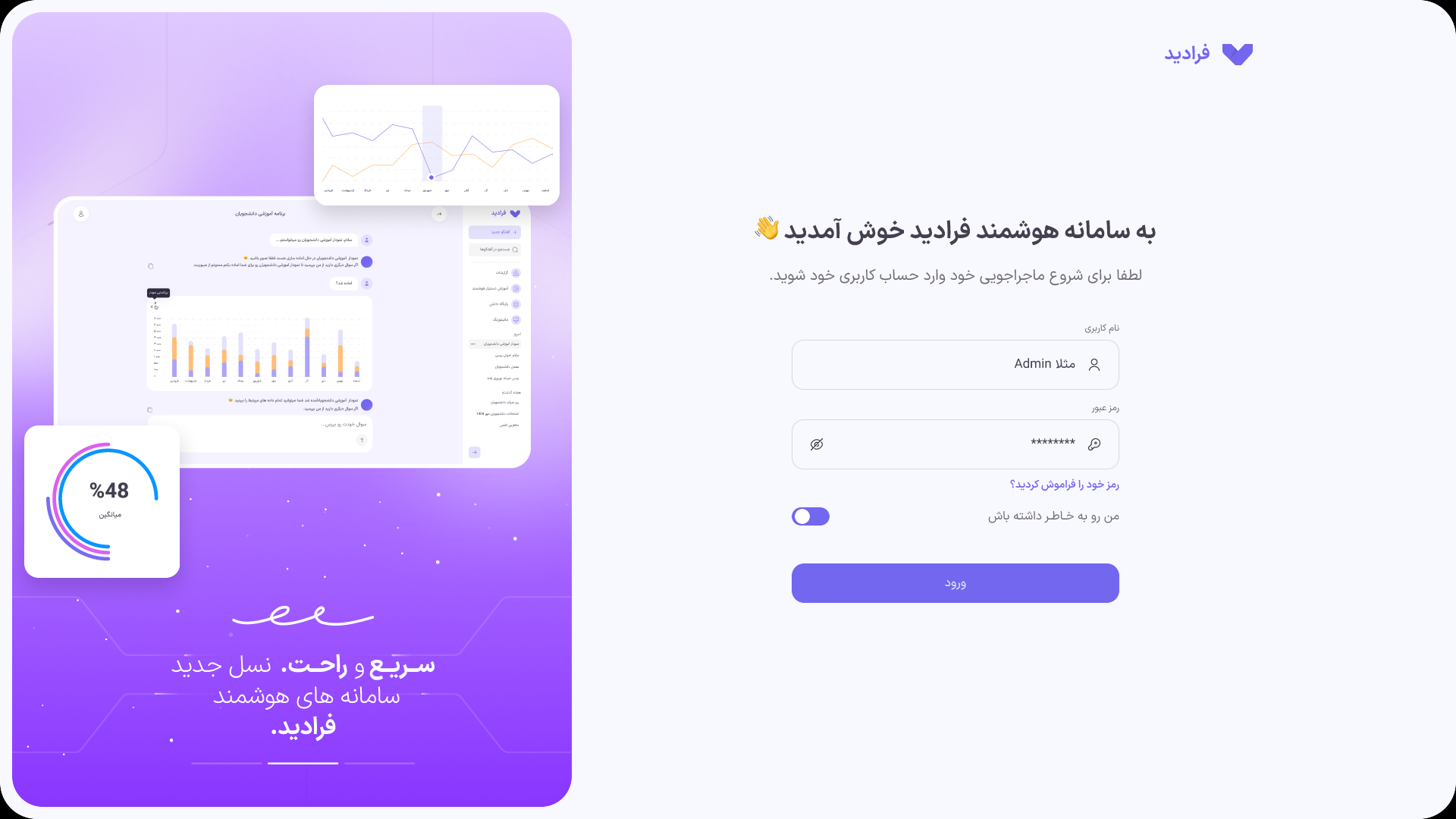
Faradid Intelligent Data Analysis Assistant
An advanced business intelligence and data analysis system based on localized Large Language Models (LLMs) that revolutionizes how organizations interact with their data.
View Project Website
Simplifying and Accelerating Data Analysis at All Levels
Faradid is built on the belief that data analysis should not be limited to technical teams, IT departments, or specialized analysts. In a large organization, a store manager, inventory specialist, or marketing manager all need data; not in the form of complex reports or multiple dashboards, but as quick, understandable, and actionable answers.
Faradid’s vision is to create an organization where any user can access accurate data analysis simply by asking a question in natural language, enabling them to make decisions based on objective facts.
By eliminating complex technical layers such as querying, dashboard configuration, and manual analysis, Faradid replaces them with an intelligent conversational interface. The system’s response process is as follows:
Faradid’s Key Differentiators
Faradid does not replace existing Business Intelligence (BI) systems or databases, but rather sits on top of them as a complementary intelligent layer.
Native Support
Custom-designed to understand analytical queries and common industry terminology, significantly reducing training time and increasing system adoption.
Multi-Agent Architecture (7 Agents)
Unlike simple chatbots, Faradid uses a collection of specialized intelligent agents that drastically increase the system’s accuracy and scalability.
Seamless Integration
Direct connection to existing databases and organizational APIs without the need to alter current system structures or migrate data.
Complete Security (On-Premise)
Fully deployed within the organization’s internal infrastructure (On-Premise). All processing is done locally, and no data is transferred to the cloud.
Main UI Components
The system’s user interfaces are designed with a user-centric and decision-making approach to form a seamless interaction with data.
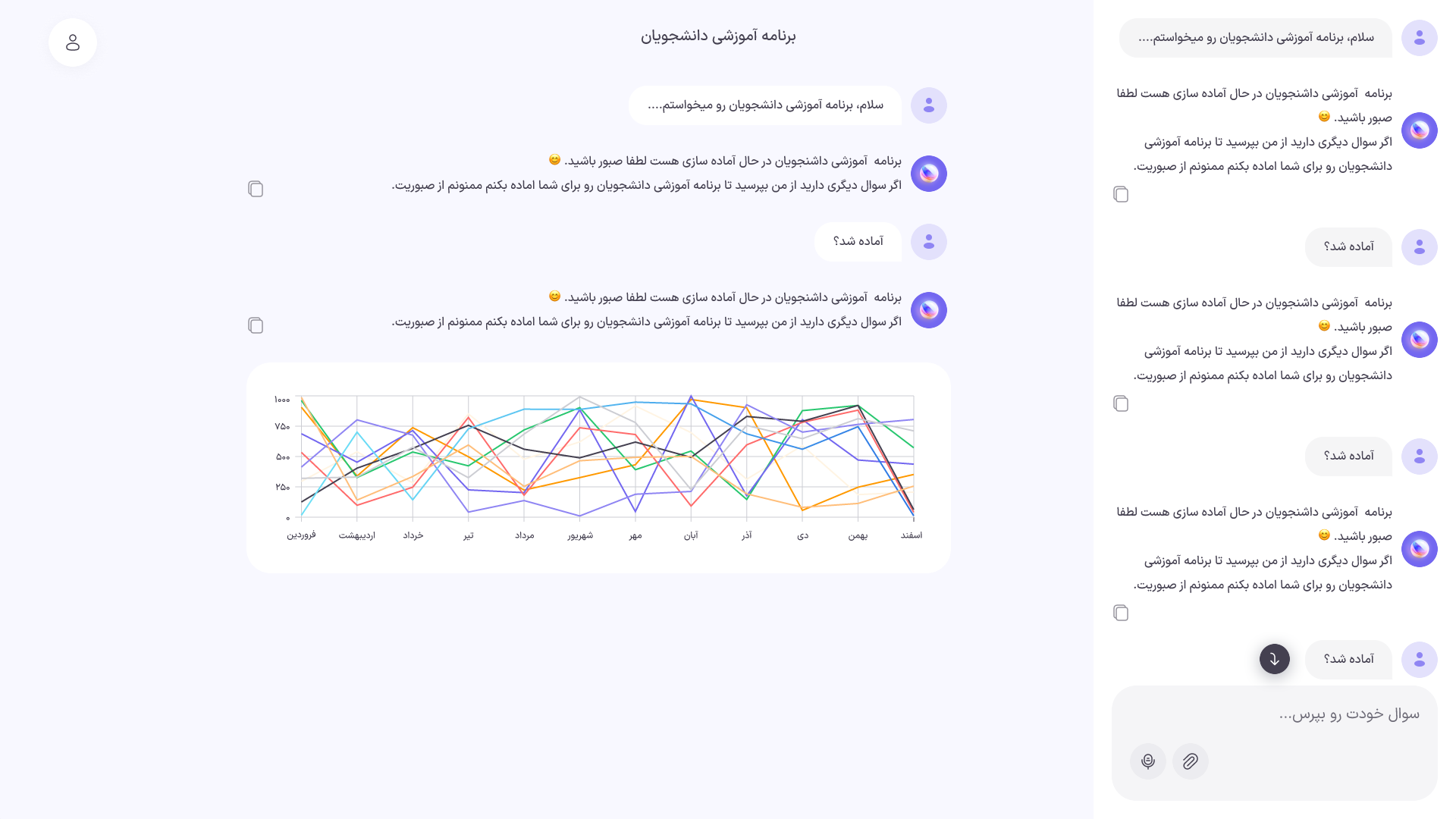
Smart Conversational Interface
Supports natural language queries, multi-turn conversations, contextual memory, and even voice input acceptance.
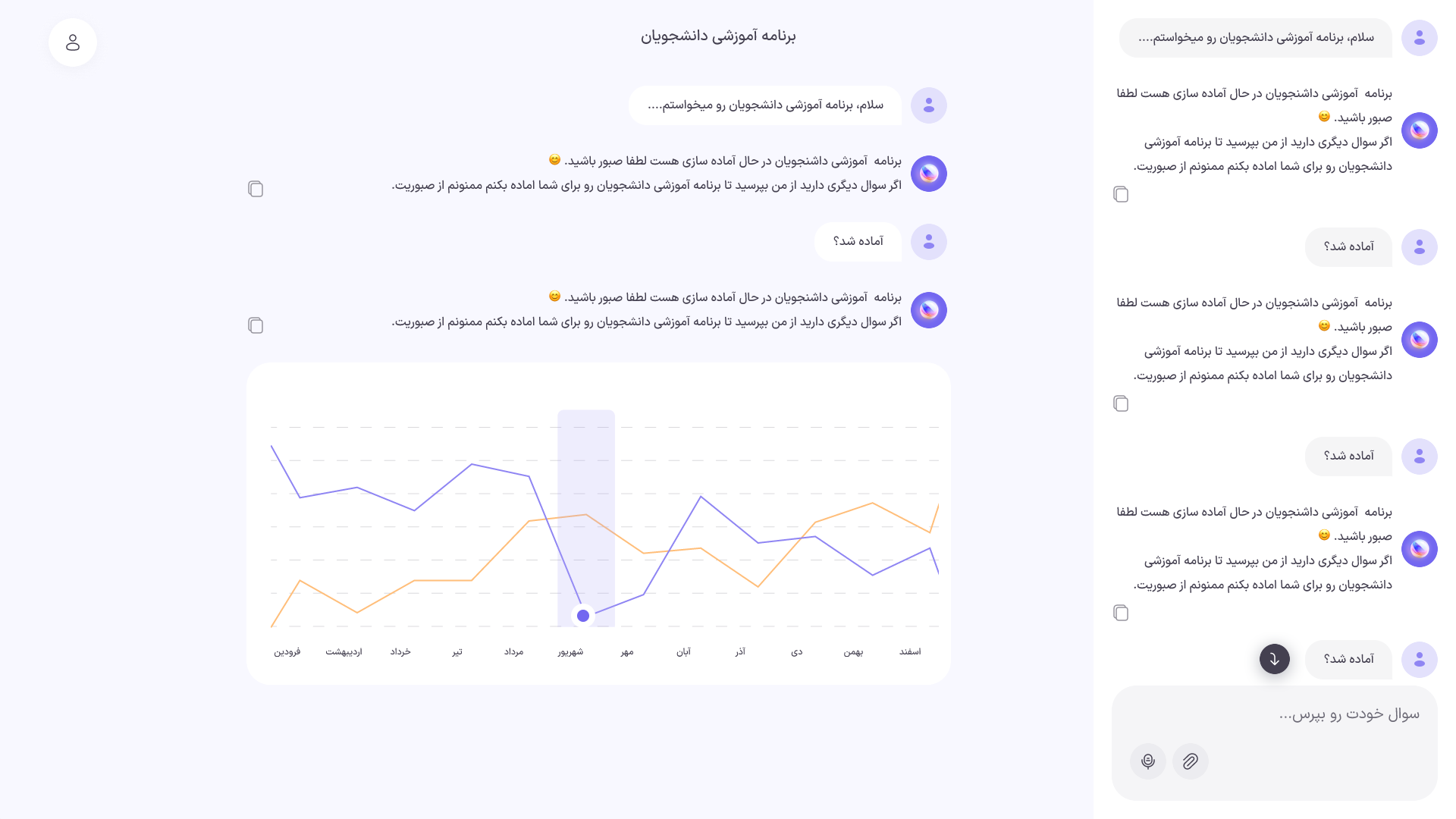
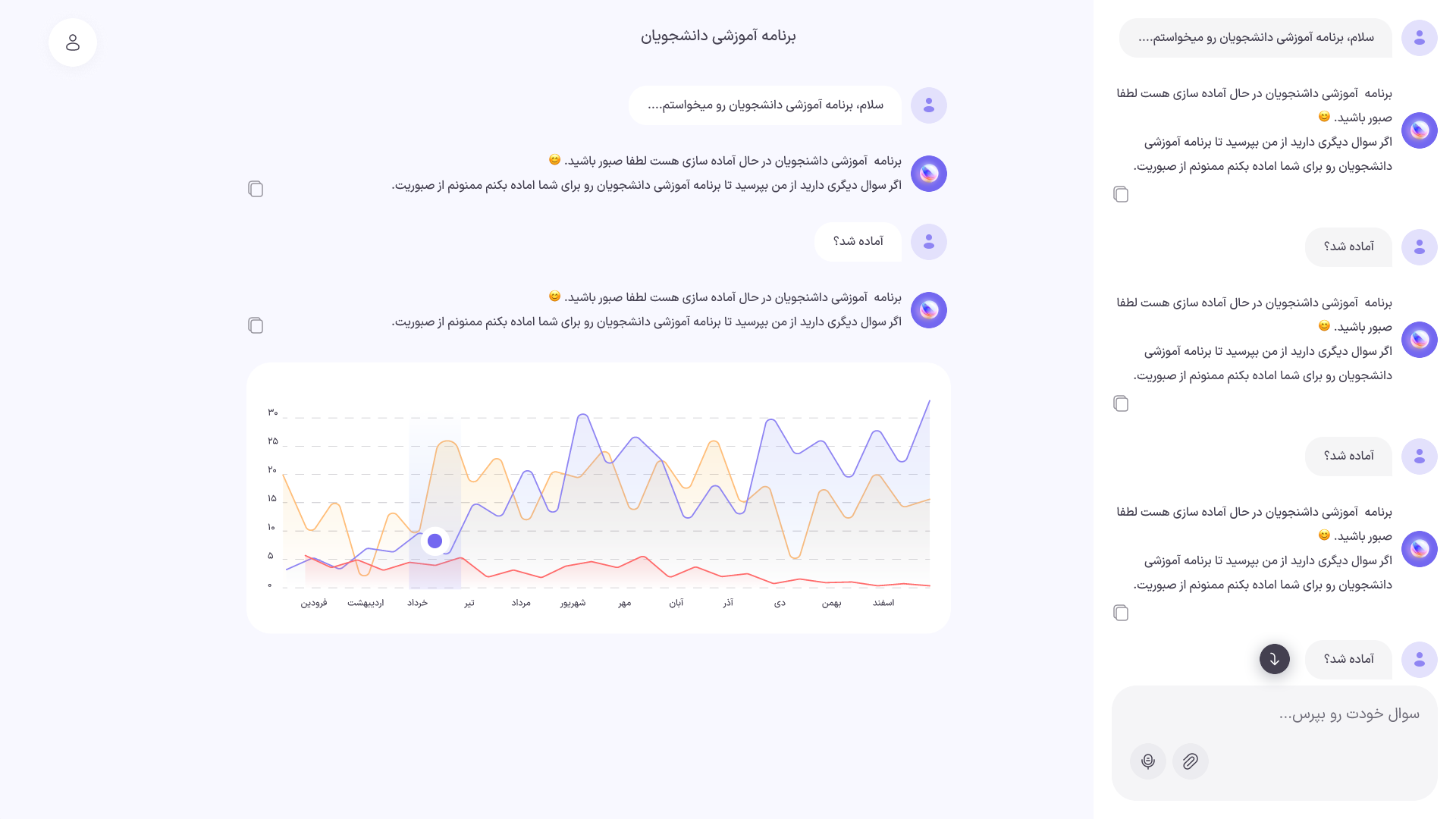
Interactive Dashboards & Charts
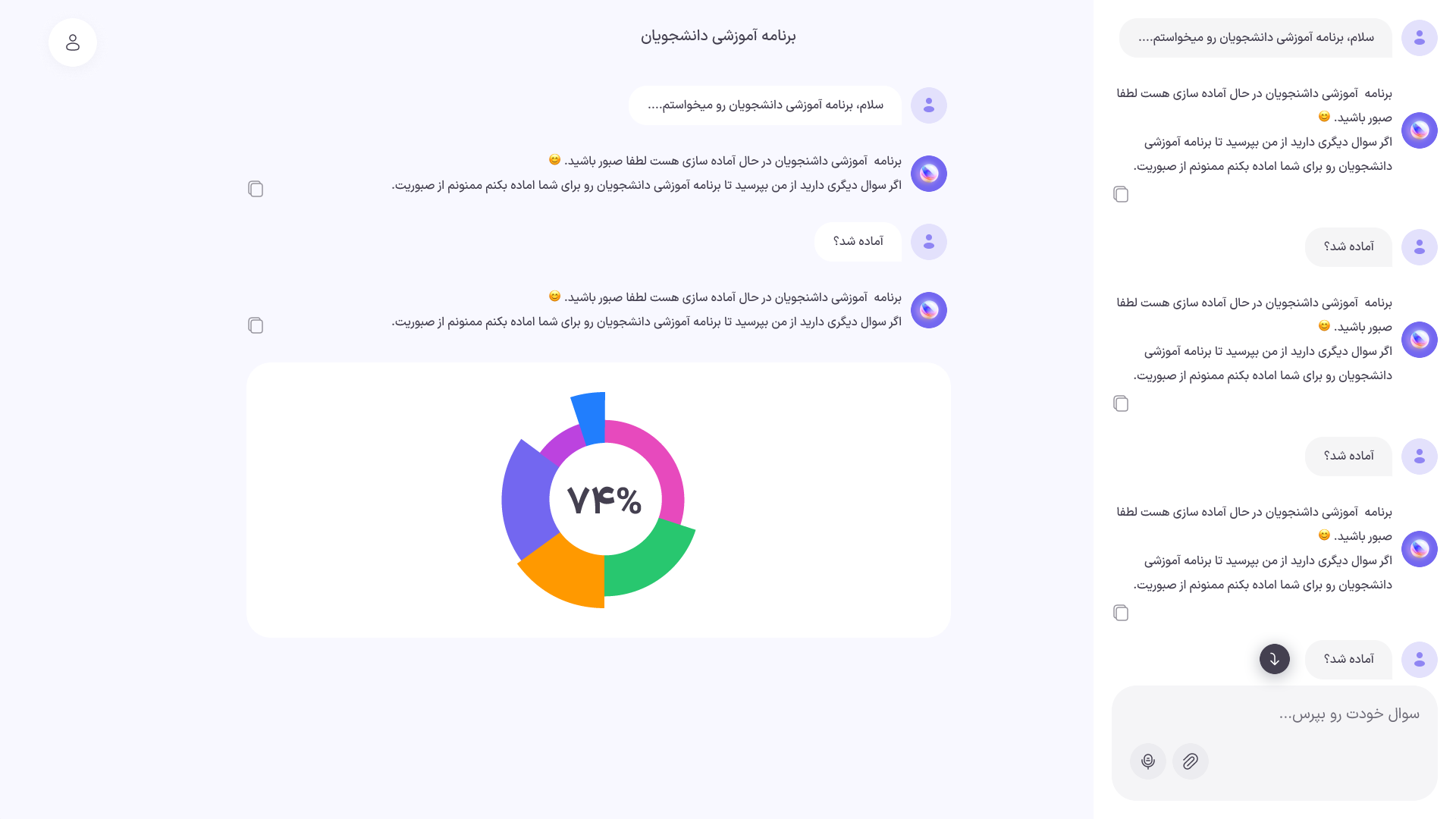
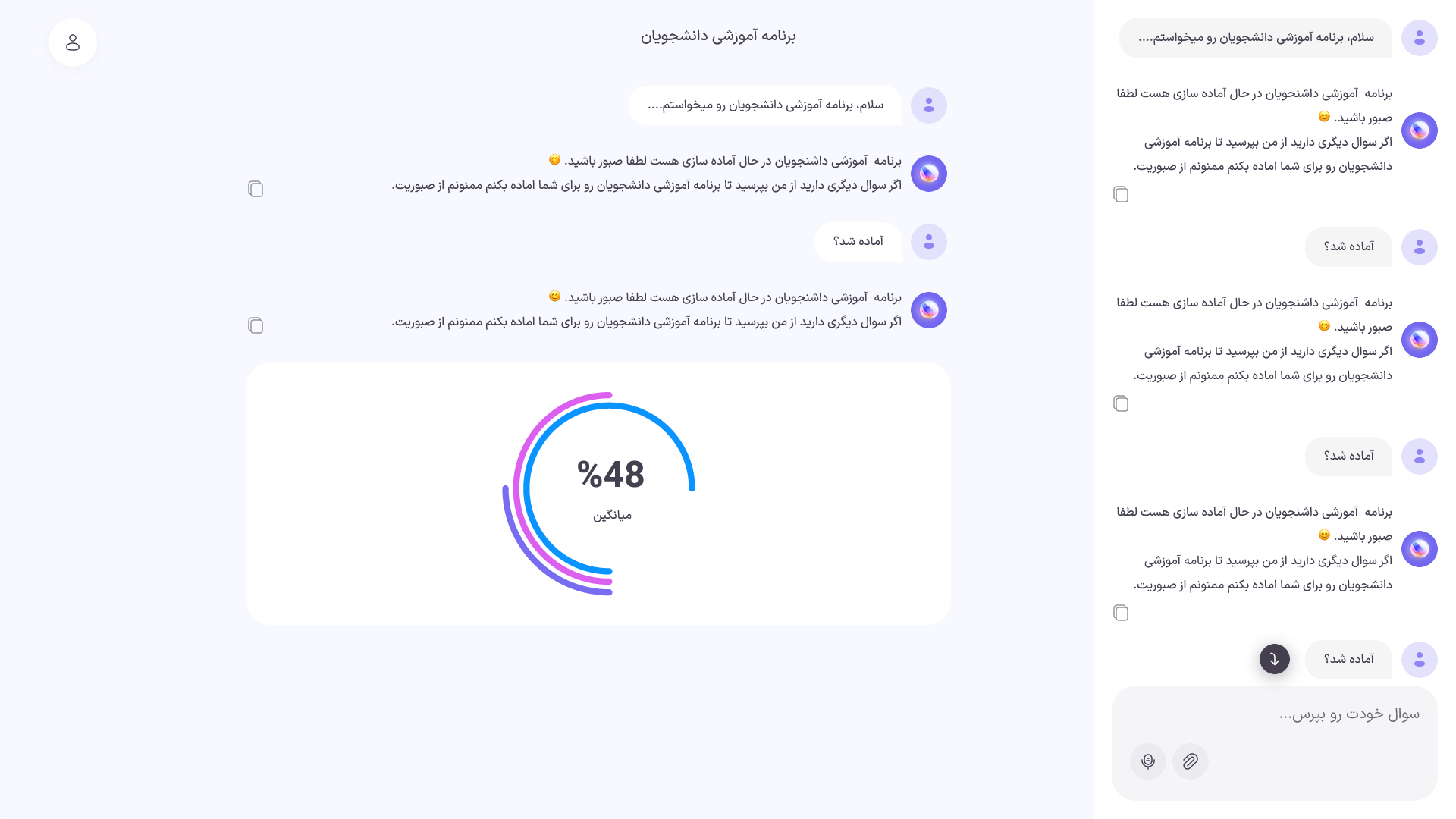
Automatic generation of charts based on data nature, including bar, line, pie, and scatter charts, as well as KPI cards.
Smart Monitoring & Alerts
Provides a monitoring panel for managers with an integrated display of alerts and resolution history for real-time operational control.
Knowledge Management (RAG)
Allows admins to upload organizational documents (Word, Excel) to train the assistants with domain-specific knowledge and analytical examples.
Layer 2: Multi-Agent Business Intelligence
This layer is the brain and main differentiator of the Faradid system. Here, a central Orchestrator analyzes the user’s request and sequentially activates the appropriate specialized agents.
| Intelligent Agent | Specialized Task | Operational Output |
|---|---|---|
| Query Generator | Converts natural language into a secure and optimized query | Accurate query tailored to the database |
| Chart Generator | Selects and generates the appropriate visualization | Standard and understandable chart |
| Anomaly Detector | Detects unusual behavior within the data | Discovers suspicious sales, transactions, or inventory |
| Correlation Detector | Analyzes statistical relationships between variables | Correlation coefficient along with interpretation |
| Analyst | Provides managerial interpretation of raw results | Extracts actionable insights for decision-making |
| Smart Monitor | Automated monitoring and alerting | Notification if KPIs cross defined thresholds |
A key feature of this layer is its modular design, meaning each agent can be developed, enabled, or disabled independently.
Main Users and Access Levels
The system features a comprehensive Role-Based Access Control (RBAC) that dictates which data each user can access. System users are defined by the following specific roles:
| User Role | Function Description | Main Use Case Scenario |
|---|---|---|
| System Administrator | Responsible for the stability, security, and high-level technical performance of the system | User management, access control, and system health monitoring |
| Content & Analysis Admin | The bridge between business knowledge and the system’s analytical logic | Document management (RAG), KPI definition, and alert rule configuration |
| Senior & Staff Managers | Strategic decision-making and overseeing organizational performance | Viewing high-level dashboards and monitoring trends |
| Data Analysts | Focusing on value-added analysis rather than manual data extraction | Discovering correlations, generating analytical reports, and validation |
| Branch Managers (Operational) | Quick decision-making at the day-to-day operational level | Daily sales monitoring, identifying anomalies, and receiving alerts |