
President of Qom University: The Judicial AI Assistant Project is Progressing at Qom University
Activity in the field of artificial intelligence, internationalization of the university, and effective communication with the industry are among the special achievements of Qom province universities.
Judicial Artificial Intelligence Assistant
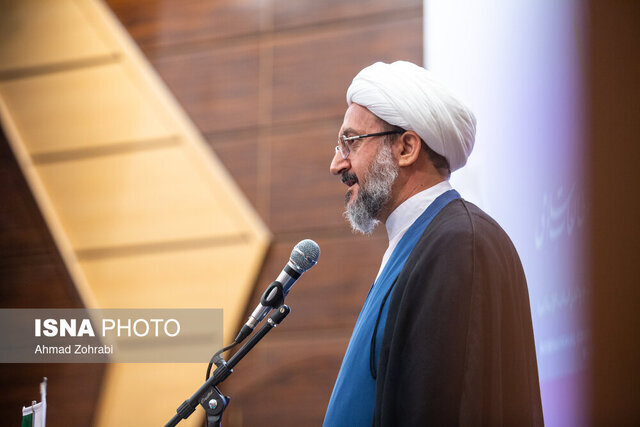
Qom (ISNA) – The president of Qom University, stating that activities in the field of AI are among the extraordinary capacities of Qom province universities, said: “In the Seventh Development Plan, the Judiciary has been tasked with automating a large portion of cases and reducing the steps up to the trial.”
With the participation of Qom University, the judicial AI assistant project is progressing with excellent speed and quality, which in itself is considered a great honor.
Higher Education Statistics in Qom Province
Ahmad Hossein Sharifi, speaking at the provincial administrative council held on Thursday evening, Aban 22, in the presence of Hujjat al-Islam wal-Muslimeen Mohseni Ejei at the Judiciary Educational Complex, stated: “Qom province has 59 higher education institutions with 89,000 students, more than half of whom are studying at postgraduate levels (Master’s and Ph.D.).”
“54% of these students are local and 46% are non-local; in other words, nearly 40,000 non-local students from all over the country are studying in the city of Qom. There are abundant opportunities facing the province’s higher education, and fortunately, valuable benefits have been reaped from these opportunities.”
“The academic community has always tried to appropriately utilize these capacities to strengthen the Islamic Revolution and increase the soft power of the Islamic Republic.”
The Most International University in Iran
Sharifi, noting that Qom is an international city and can be considered the most international city in Iran, added: “The presence of 120 different nationalities in this city and the fact that about one-fifth of its population consists of non-Iranians is evidence of this claim, and Qom universities have also made good use of this opportunity.”
Authority in Humanities and Spiritual Atmosphere
The president of Qom University announced: “The spiritual and sacred atmosphere of Qom has allowed the universities of this province to benefit from this blessing and rank among the country’s least vulnerable universities regarding social issues; perhaps in some years, we have achieved the first rank in this regard, which we truly deserve.”
He added: “Proximity to the rich mines of jurisprudence, philosophy, exegesis, and mysticism has resulted in special attention being paid to the humanities in Qom province. More than 70% of our students study in the humanities, which has granted Qom province a unique scientific authority in this field; in this regard, the strongest and most effective centers of Islamic humanities, which embody the scientific and cultural ideals of the revolution, are located in Qom.”
Connection with Industry and Innovation
Sharifi stated: “On the other hand, the existence of industrial estates and units has provided a suitable platform for effective communication between Qom universities and the industry. We have tried to identify and address the needs of the industry in a knowledge-based manner as much as possible.”
Development of the Shoe Industry
For instance, 70% of the country’s industrial shoe exports are from Qom province, which has led to the establishment of a shoe major, a shoe and paint research institute, and a national shoe laboratory in this province.
Artificial Intelligence Research
Also, the AI research and innovation center is active in the province’s universities to take steps towards the development of modern technologies.
Special Position of the Faculty of Law
Reiterating that the AI research and innovation center is active in the province’s universities, he added: “However, the province also faces challenges that need to be addressed; for example, the field of law at Qom University is of special importance.”
The Faculty of Law at Qom University ranks third among all law faculties in the country. The statistics regarding the articles published by the faculty members of this department also demonstrate their high capability, such that an average of 9 articles are produced per faculty member.